
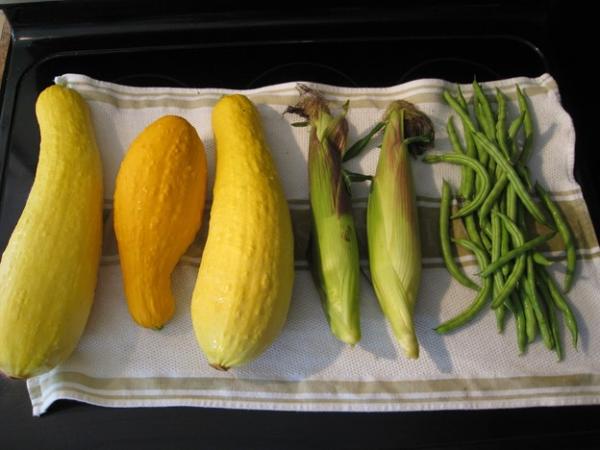
Thanksgiving dinner and the National Day of Mourning fall on the same day. A look at what’s on the table makes that pairing especially striking.
Take away the crops Indigenous farmers developed in the Americas, and a familiar Thanksgiving plate starts to empty. The mashed potatoes go first, then the candied sweet potatoes, the cornbread dressing, the green bean casserole, and the pumpkin pie. Add two native foods that Indigenous people gathered long before commercial growers raised them, and the cranberry sauce and pecan pie go, too. Many dishes Americans think of as Thanksgiving traditions begin with generations of Indigenous knowledge about what to grow, what to gather, and how to prepare it. [1] [2] [3]
From the Andes and tropical America
The white potatoes we mash come from a crop first domesticated by Indigenous farmers in the Andes of South America. Over generations, Andean farmers developed potatoes suited to different growing conditions. Sweet potatoes have a separate history. They are the edible roots of a different plant, domesticated in tropical America. Both had long histories in Indigenous agriculture before they made their way into American holiday kitchens. [1] [4] [5]
Corn, pumpkins, squash, and beans
In what is now Mexico, Indigenous farmers transformed a wild grass called teosinte into maize. As maize spread through the Americas, communities selected varieties suited to their own growing conditions and cooking traditions. The sweet corn served as a side dish and the cornmeal baked into dressing reflect that long history of selection. [1] [2] [6]
Pumpkins and other winter squashes belong to a group of crops Indigenous farmers domesticated in several parts of the Americas. Generations of selection yielded squashes with different shapes, flavors, and uses. Green beans are typically the tender, immature pods of the common bean, a crop domesticated in both Mesoamerica and the Andes. Lima beans, sometimes served with corn in succotash, are a separate species with their own history of domestication in those two regions. [1] [6] [7] [8] [9]
Cranberries and pecans came from wild harvests
Indigenous peoples in North America gathered wild cranberries and used them as food long before commercial cranberry cultivation began in Massachusetts in the early nineteenth century. Native peoples likewise harvested wild pecans for thousands of years. The sauce and pie we serve today draw on that older familiarity with native fruits and nuts. Their history begins with knowing where and when to gather them. [3] [10] [11]
A living tradition in Fort Wayne
Here in Fort Wayne, the Miami Tribe of Oklahoma’s Cultural Resource Extension Office and Myaamia community members tended a cornfield at Peehkahkionki in 2026. Tina Fox and Stella Beerman describe how the garden gives families a place to learn to plant and care for miincipi, the Myaamia word for corn. The Myaamia flour corn they describe can be made into hominy and ground into flour. Some of the harvest is ordinarily set aside as seed for the next planting. The knowledge that helped shape what Americans eat is still being practiced and passed on here. [12]
What we remember at the table
The modern Thanksgiving dinner took shape long after the 1621 gathering at Plymouth. Its familiar dishes bring together ingredients with histories in different places, from the Andes to the woodlands of North America. In Plymouth, United American Indians of New England has observed a National Day of Mourning on Thanksgiving since 1970, remembering Indigenous ancestors and calling attention to the dispossession and violence that followed European settlement. [13] [14]
That is the irony of the meal. A holiday often told through the story of English settlers depends on foods that Indigenous peoples spent generations developing, tending, and gathering. In Fort Wayne, where Myaamia families still plant corn and save seed, that history is as close as the next growing season.
Works Cited
- Smithsonian Institution. “Origins of Thanksgiving Foods”.
- Smithsonian National Museum of the American Indian. “American Indian Perspectives on Thanksgiving”.
- Delaware Tribe of Indians. “Gifts of Food from American Indians”.
- Hardigan, Michael A., et al. “Genome Diversity of Tuber-Bearing Solanum Uncovers Complex Evolutionary History and Targets of Domestication in the Cultivated Potato”. Proceedings of the National Academy of Sciences, 2017.
- Genesys. “Sweetpotato”.
- Piperno, Dolores R., and Bruce D. Smith. “The Origins of Food Production in Mesoamerica”. The Oxford Handbook of Mesoamerican Archaeology.
- University of Florida IFAS Extension. “Green Beans”.
- Brown, Cecil H. “Prehistoric Chronology of the Common Bean in the New World: The Linguistic Evidence”. American Anthropologist.
- Serrano-Serrano, Martha L., et al. “Evolution and Domestication of Lima Bean in Mexico: Evidence from Ribosomal DNA”. Crop Science, 2012.
- Smithsonian Libraries. “Native Fruit: Cranberry for all Seasons”. 2017.
- University of Florida IFAS Extension. “The Pecan Tree”.
- Fox, Tina, and Stella Beerman. “Caring for Myaamia Miincipi ‘Corn’ 2026”. Aacimohtaatiiyankwi, November 12, 2026.
- Plimoth Patuxet Museums. “What Did They Eat at the 1621 Harvest Celebration?”.
- United American Indians of New England. “Historical Information”.